I have always enjoyed reading though I must say, I have
never felt quite up to par with the reading level of my classmates. After
reading this chapter, I kept thinking about times I didn’t know where to begin
solving a math problem or a scientific calculation. I might have known the
formulas and I might have been able to identify what was given to me… but
picturing the situation or making sense of it all was sometimes a struggle. I
didn't know at the time but the teachers helping me understand were content area educators helping a struggling reader.
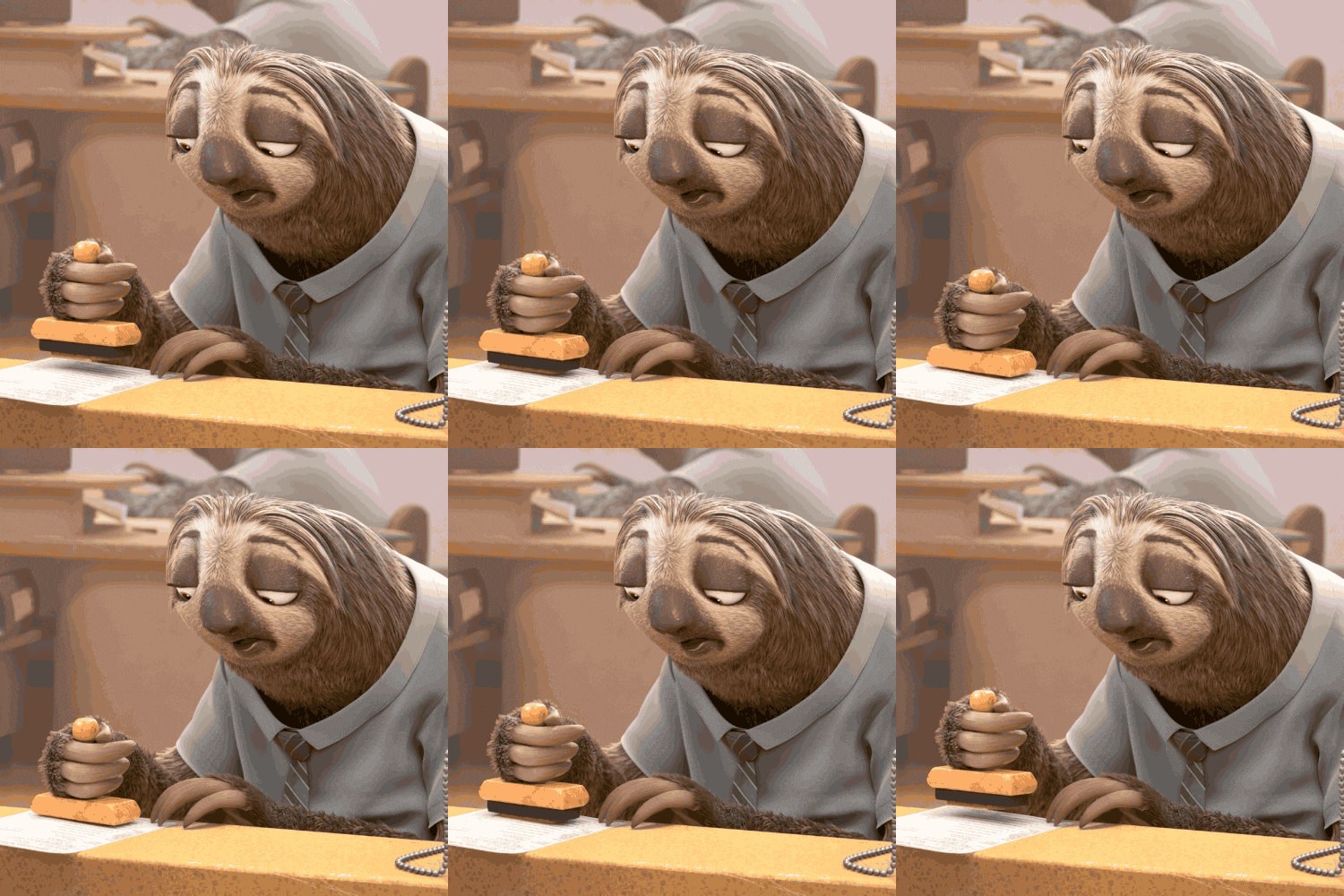
[Reading Pace Level Zootopia Sloth]
“There’s so much we need to do for our kids, and never
enough time to do it all. And yet our close observation of their struggles
tells us that to help students understand and learn from the tasks we assign
them, we must work with their reading process.”
This to me is wonderful and the book goes on to remind us
that no, we may not be a reading teacher but when we help a student mature as a
reader in our content area classrooms, we are teaching them “one of the skills
involved in learning.” Struggling readers are kinda being cheated from their
opportunity to learn. What comes with this job is helping students understand
the concepts and how to use the resources provided to them.
Think Alouds are a strategy that could really
benefit struggling readers. Presenting live and active thoughts as one reads a
passage, picture, or diagram can really model other beneficial reading
strategies to readers that do not know what to think about when reading (ex. when
the book describes students who have problems picturing an unfamiliar
situation). I also agree that it is important to choose materials students can
successfully read. If a student is already struggling to understand text,
proving materials unmindfully can be rather discouraging for students
repeatedly having issues with text beyond their reading level. [324 words]

